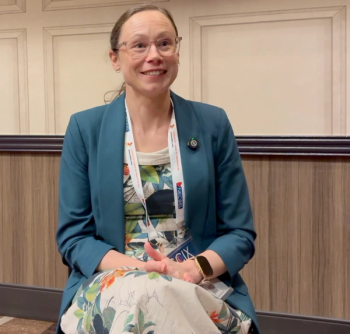
A candid plenary on the incentives shaping academic science was followed by an afternoon of talks spanning flowing SERS detection, historical textiles, maple syrup, pathogen immunoassays, and electrochemical Raman microscopy.
Interested in learning more about ultraviolet–visible (UV-vis) spectroscopy at Pittcon? The Spectroscopy editorial staff has you covered!
At Pittcon 2026, there will be several talks conducted over the course of the week that will focus on how ultraviolet–visible (UV-vis) spectroscopy-based techniques are being used in several key application areas. In this pre-Pittcon guide, we preview some of these talks that you should check out.
First, on Sunday March 8th from 8:30 to 11:00 am, Brian Bosso of STERIS will deliver a talk, “In-Line UV Spectrometry Monitoring in Cleaning Validation.” Biopharmaceutical manufacturers often depend on non-specific at-line final-rinse testing to verify equipment cleanliness, risking false positives and inefficient on/off-line analyses.1 Bosso’s talk will explain how in-line UV spectroscopy at 220 nm enables continuous monitoring of cleaning, with sensitivity enhanced by optimizing sanitary flow-path length.1
Later on Sunday, from 2:30 to 2:50 pm, Charles Shelor of the University of Texas at Arlington will deliver a talk, titled “High Dynamic Range Absorbance and Simultaneous Deep UV Fluorescence Measurement in a Liquid Core Waveguide Flow Cell Coupled to Liquid Chromatography.” Liquid core waveguide (LCW) flow cells enable highly sensitive absorbance detection via total internal reflection in a UV-transparent capillary. Although conventional axial measurements offer low noise, dynamic range is limited.2 Shelor’s talk will present his recent work that shows how adding simultaneous radial absorbance detection increases dynamic range by over two orders of magnitude, enabling trace and major component analysis together.2
On Tuesday March 10th, from 8:30 to 9:00 am, Steven Chin of Genentech will give a talk titled, “Insights into siRNA Duplex Stability from UV-Vis Concentration and Melting Temperature Analyses.” Non-covalent siRNA duplex therapeutics require distinct analytical strategies versus single-stranded oligonucleotides.3 In his talk, Chin will explore how concentration, solvent, and salt conditions affect UV–vis absorbance, hyperchromicity, and thermal melting (Tm) measurements, revealing duplex stability trends. Size-exclusion chromatography (SEC) studies show strong solution-environment effects on duplex versus single-strand behavior and aggregation risk.3 The results inform critical quality attributes and expose gaps in current industry methods, providing guidance for robust characterization of RNA duplexes using complementary chromatographic and spectroscopic approaches.3
Later on Tuesday, from 2:50 to 3:10 pm, Temekia Rucker of the University of Memphis will give a presentation titled, “Sirius Red-based Method for the Determination of Type I Collagen Content in New and Aged Bone.” Estimating postmortem interval (PMI) from skeletal remains challenging, and bone collagen has been underexplored. In her presentation, Rucker will discuss how the development of a novel quantitative spectrophotometric assay using Sirius Red dye can measure type I collagen in cortical bone via absorbance at 530 nm.4 The analyses of new and 10–100-year-old porcine bones showed collagen loss with age, supporting collagen content as a potential PMI indicator for forensic applications.4
Following Rucker’s talk from 3:10 to 3:30 pm, Thinh Nguyen of North Carolina State University will deliver a talk titled, “High-Contrast Aptamer-Based Merocyanine Displacement Assays for Sensitive Small Molecule Detection.” Aptamer-based colorimetric dye-displacement assays enable rapid, mix-and-read detection but often suffer from low sensitivity and poor spectral contrast. In this talk, Nguyen introduces the solvatochromic coumarin–merocyanine dye X-19539-107, which forms H-aggregates absorbing at 445 nm in water and monomers absorbing at 610–625 nm when aptamer-bound.5 Incorporated into diverse aptamer assays, the dye delivers higher displacement efficiency, sensitivity, and color contrast than cyanine indicators.5 Toxicologically relevant cocaine detection in saliva demonstrates strong real-world potential for on-site small-molecule sensing.5
And finally, on Wednesday morning from 8:30 to 8:50 am, Muhammad Zahid of the University of Agriculture Faisalbad in Pakistan will deliver a talk titled, “Visible Light Driven MnO2/MnS Hybrid Nanostructures for Photocatalytic Degradation of Organic Pollutants: A Synergistic Approach for Wastewater Treatment.” In his presentation, Zahid will discuss the hydrothermal synthesis of MnO₂/MnS nanocomposites and their solar-driven degradation of Rhodamine B dye.6 Structural analyses and parameter optimization (pH, catalyst/oxidant dosage, time, concentration) achieved 93% removal in 120 minutes at pH 4.6 Radical trapping, kinetic modeling, and response-surface analysis clarified mechanisms, supporting MnO₂/MnS nanocomposites as effective solar photocatalysts for wastewater treatment.6